

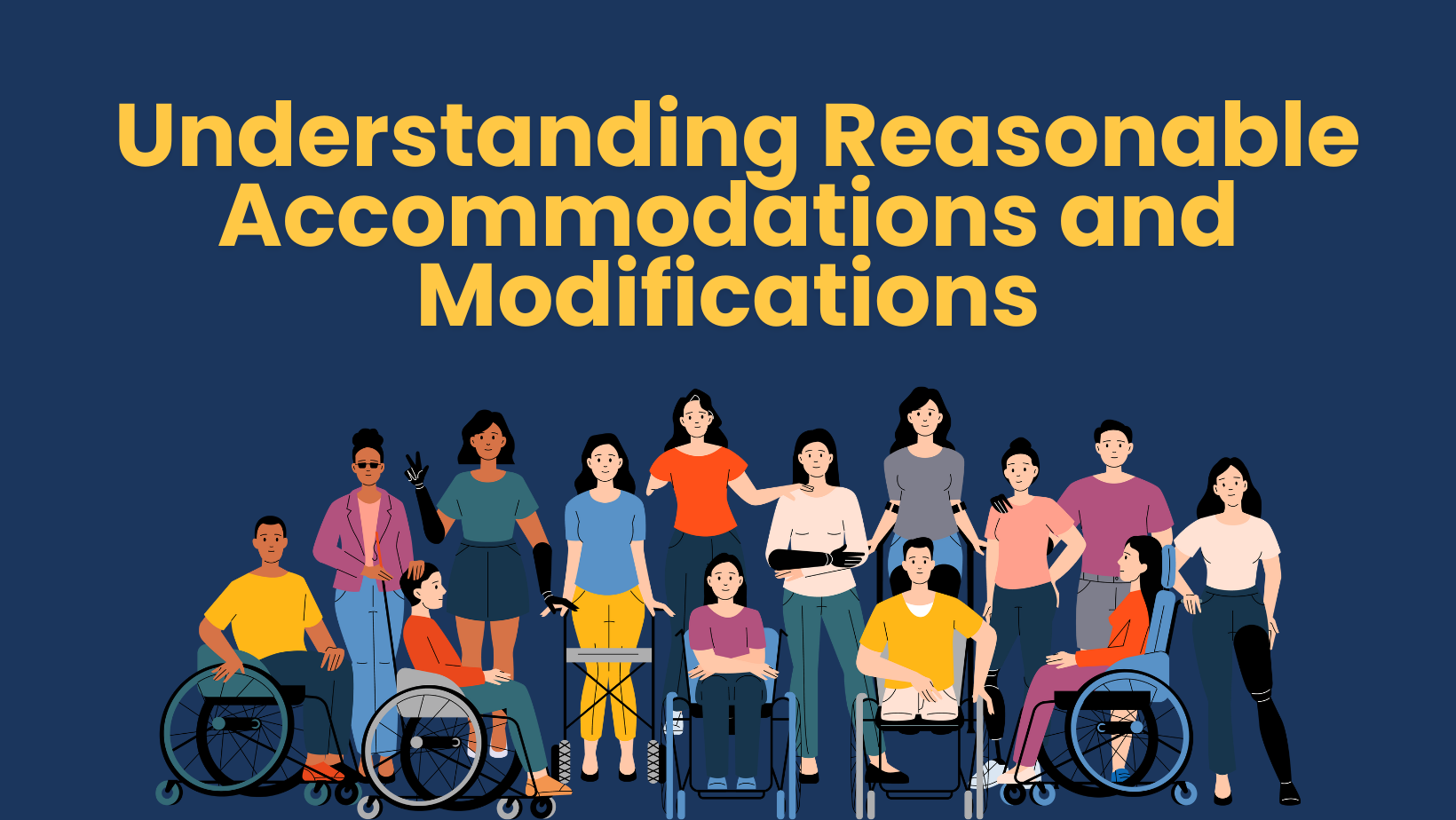
At the Connecticut Fair Housing Center, we believe that everyone deserves safe, accessible housing that supports independence and dignity. Under the federal Fair Housing Act (FHA) and State fair housing laws, landlords and other housing providers are required to make changes when necessary to ensure people with disabilities have equal opportunity to use and enjoy their homes. These adjustments come in two distinct forms:
- Reasonable accommodations which involve changes to policies or practices.
- Reasonable modifications which involve physical adjustments to the property.
Understanding the difference, and how to request each, is essential to protecting your rights. Let’s break it down in clear terms.
What Are Reasonable Accommodations?
Reasonable accommodations are changes or exceptions to existing rules, policies, or services that help individuals with disabilities fully enjoy their housing. Examples include:
- Allowing an assistance animal in a “no-pets” building
- Assigning a closer parking space in a “first-come, first-served” lot
- Permitting alternative rent payment methods to accommodate disability-related needs
Typically, the housing provider bears the cost of accommodations, unless doing so presents an undue financial or administrative burden or fundamentally alters operations. The request process must involve a dialogue to consider reasonable alternatives, if needed.
What Are Reasonable Modifications?
Reasonable modifications are structural changes to the living space or common areas, necessary for individuals with disabilities to fully use and enjoy housing. Examples include:
- Installing grab bars in bathrooms or hallways
- Adding a ramp to the entrance
- Widening doorways or lowering countertops
Unlike accommodations, the tenant is typically responsible for covering modification costs—unless the housing provider receives federal funding, in which case the provider must pay unless it causes an undue burden.
Side-by-Side Comparison
| Feature | Reasonable Accommodation | Reasonable Modification |
|
Definition |
Adjustments to rules, policies, or services |
Structural changes to living or common areas |
|
Who pays?
|
Usually the housing provider | Usually the tenant, unless federally funded housing |
|
Examples
|
Service animals, flexible payment, assigned parking
|
Ramps, grab bars, widened doorways
|
|
When may providers deny? |
When it’s overly burdensome or changes core operations |
Same — undue burden or fundamental alteration applies |
When Is a Request “Reasonable”?
A request—whether for an accommodation or modification—is considered reasonable if it:
- Does not impose an undue financial or administrative burden
- Does not fundamentally change the nature of the housing provider’s operations
- Is technically feasible and not harmful
Providers must engage in an interactive process, discussing the request, identifying possible alternatives, and responding in a timely manner. Delays may be considered denials.
How to Request Accommodations or Modifications
- Submit a Request — It can be oral or written. Written requests help establish a record.
- Explain Your Need — You don’t need to disclose medical details—just enough to show the connection between your disability and the request.
- For obvious disabilities, providers cannot request documentation.
- If your disability or need isn’t evident, limited documentation may be requested.
- Include Documentation — When necessary, a note from a medical or service provider can clarify the need.
- Keep Copies — Record-keeping supports accountability and safeguards rights.
What If a Request Is Denied?
If your request is denied, the provider must explain why. Denials are only permitted if the request is unreasonable. If you believe your rights were violated, you can:
- File a complaint with HUD (within 1 year)
- Contact the Connecticut Commission on Human Rights and Opportunities (CHRO) (within 300 days)
- Reach out to the Center for guidance and support
Need Help Crafting Your Request?
The Connecticut Fair Housing Center is here to help. Our Disability Letter Generator can assist in drafting requests for either accommodations or modifications. You don’t have to face this alone.
By understanding your rights under the Fair Housing Act and taking informed action, you can secure the changes you need to live safely, independently, and with dignity. If you need assistance, or just want to confirm your next step, contact us anytime.